
 Greg Beerling
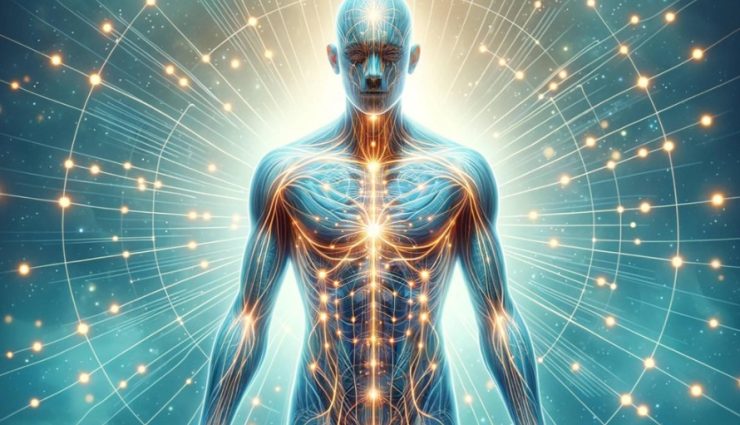
Hello Holistic Bliss readers, I’m sure many of you have familiarity with the concept of channels in Acupuncture and Traditional Chinese Medicine.
I’m also sure you’re aware that they are part of the way in which Qi or life energy infuses and animates the functions of the human body and the senses we use to interact with the world we live in?
I’ve previously said that many of the descriptions used in Acupuncture, can be very metaphoric and pragmatic in nature. From the perspective of a Chinese medicine practitioner, they are one of the systems leaned on when viewing why a client has sought my assistance.
They are extremely helpful in determining the location and other associated places that I will begin to arrange together to build a picture of the pattern of the person’s problem.
Regular Acupuncture approaches have the human body composing of 12 main regular organ channels outlining the way in which the responsibilities of the organs expand out and link onto signs and symptoms experienced by the patient.
These channels are not alone and can never be entirely separated into individual items, as is the normal reductionist process of conventional medicine, which requires all symptoms to have one and only one reason that causes the problem for simpler analysis outcomes.
Acupuncture relies more on the emphasis of volumetric and tidal motions being the instigator of conditions, through excessive types of causative exposures (6 external environmental factors and 7 emotions) or draining types of metabolic consumption and/or lack of absorption due to low-capacity metabolic capabilities.
Once this pattern is determined, which can be purely thought of as often a channel problem only (many musculoskeletal injuries are, by their simplistic structural nature, thought of as purely a channel problem), the steps to improve the flow of this disrupted Qi can be measured, and a group of therapies applied to help this flow to be re-established and remove the antagonism. Once this flow is established, physical calm and reduced strain and discomfort is a regular outcome.
Another way the channels can be viewed is that features and other textures that lie and are palpated along the recognised lines described can be recognised as stresses and strains to the deeper organ processes. These features allow differential recognition, and help an acupuncturist to find and distinguish the disruptions that are deeply embedded and show whether the organ is functioning well or poorly, in amongst the set of complementary organ behaviours.
In addition to the 12 channels are the 8 extra channels, which are seen to influence and access deeper, more constitutional and emotional aspects of the person, helping an acupuncturist to bolster someone’s current capacities and strengths through reordering many core reflexes and internal anchors that may have fabricated themselves in the background of the client’s life.
I’ll be investigating next month a little more the deeper connections and linkages the channels have to their parent organ and the ways in which this adds to the surface placement that channels have in the wider system of Traditional Chinese medicine.
See you then.
Connect with Greg and book a session today at:
Ph 0733668595
Email info@nrchi.com.au
 Gerard Bini
 Marion Hutton





Add comment